
What Floor Buffing Actually Does (and When You Need It)
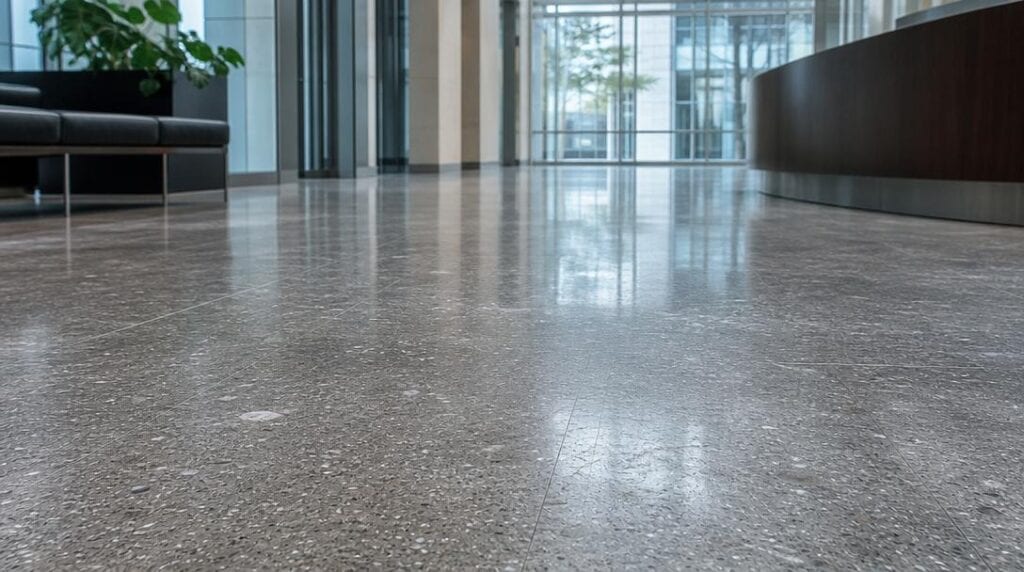
Halifax road salt doesn’t give commercial floors much of a chance. By January, most lobbies on Barrington and Spring Garden have that grey, hazy look that building managers mistake for worn-through finish.
It usually isn’t.
That grey look is salt residue and fine grit embedded in the top layer of wax, not damaged finish underneath. A proper spray buff lifts it without touching the base coats.
Here’s what buffing actually involves: a rotary machine running at 175 to 350 RPM, a buffing pad, and a spray solution applied to the floor surface. The solution re-melts the top layer of finish just enough to let the pad work it smooth. Grit releases. Micro-scratches close. The floor comes back to a uniform gloss. The whole process is faster than any stripping job, requires no extended dry time, and doesn’t ask a lobby to stay closed for hours.
Stripping pulls every coat of wax off the floor and starts the finish system from scratch. Buffing maintains the system that’s already there. For well-kept VCT in good condition, a regular buff cycle is the cheapest and least disruptive way to keep a lobby or corridor presentable. No heavy chemical exposure. No real downtime. No full-day crew.
The complicating factor is how often that cycle needs to run. In Halifax, that answer depends almost entirely on where the building sits and what kind of traffic it takes.
If the finish on your lobby floor is already showing that grey haze, it’s worth getting someone in to assess it before salt season compounds the problem.
How Often Should Halifax Offices Be Buffed?
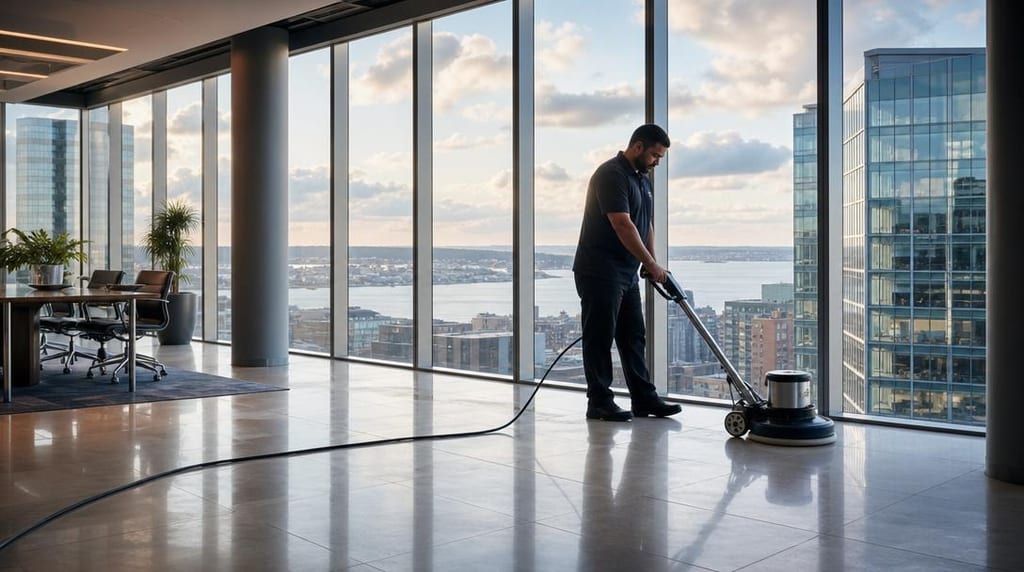
The honest answer: it depends on your building, and in Halifax, it depends heavily on the time of year.
Downtown towers are on the tightest schedules. Properties like Purdy’s Wharf, Cogswell Tower, the Maritime Centre, and the TD Centre see continuous foot traffic through lobbies and corridors running on VCT and polished stone. From November through April, HRM road salt tracks in through every entrance on every shift. At that traffic volume, the finish degrades fast. Most of these buildings need a buff cycle every two to four weeks through winter just to hold a presentable sheen.
Out in Burnside and Bayers Lake, the math is different. Lower foot counts mean the finish holds longer between passes. Monthly or quarterly buffing is typically enough, though buildings near main entrances may need tighter attention through peak winter months.
Schools and healthcare facilities sit in their own category. Halifax Regional Centre for Education sites and NSHA clinics almost universally run on VCT, operating at full capacity year-round. Those facilities are usually working toward an annual strip-and-wax cycle, with regular buff passes scheduled in between to keep the surface from going dull before the full service is due.
A practical rule: if the finish is losing gloss and the floor looks gray or hazy, that’s a sign the buff cycle needs to tighten, not a waxing problem. In Halifax winters, waiting too long between passes means the next job takes a lot more time to recover.
If your building is already past that point, C & C Commercial Cleaning Services Inc can get a buff scheduled quickly. Call (902) 440-8694 to find out what the turnaround looks like.
Frequency is one question. The other one we get constantly is whether buffing and burnishing are the same thing. They aren’t.
Buffing vs. Burnishing — What’s the Difference?
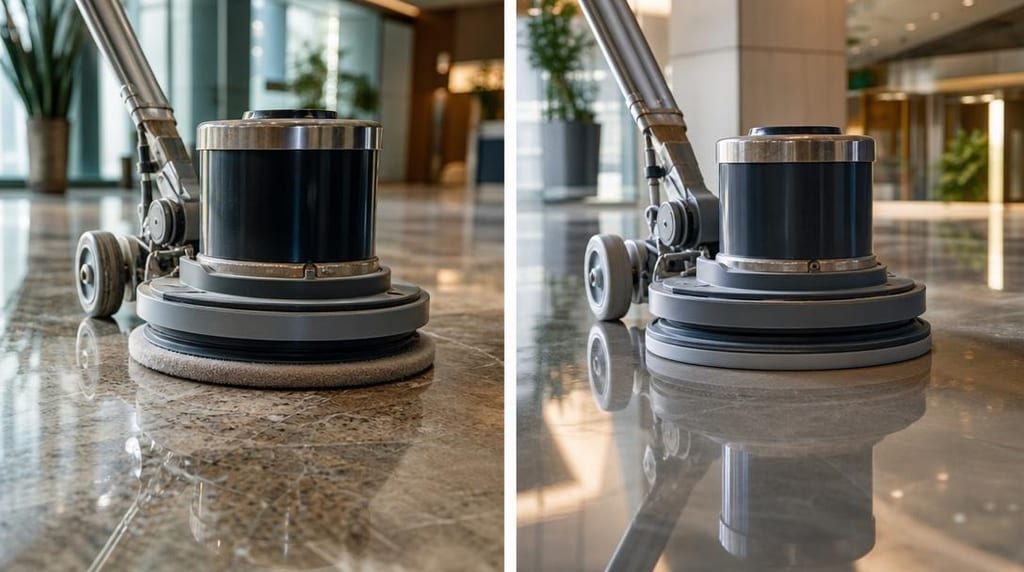
They use similar machines and run on the same floors, but they aren’t interchangeable. The difference comes down to speed, and speed changes everything.
A floor buffer runs at 175 to 350 RPM. At that range, the pad agitates the surface of the finish, redistributes the wax, and restores a satin-to-medium gloss. It’s a forgiving process. Older VCT, thinner finish coats, floors that have been maintained for years without a full strip — they all respond well to a low-RPM buff without risk of damage.
Burnishing runs at 1,500 to 2,500 RPM. That speed generates heat, and the heat is the point. It thermally activates the polymer in the finish, which is what creates that deep, wet-look gloss you see in high-end office lobbies. The results are impressive. But burnishing asks for a finish product built to handle it. Apply that kind of heat to a floor coated with standard-grade wax, or one where the finish is uneven, and you’ll get marring, streaking, or a patchy sheen that looks worse than what you started with.
Halifax shoulder seasons add another wrinkle. When wax softens in the humidity of a spring thaw or a wet November, the finish is more vulnerable than it looks. During those windows, burnishing aggressively can mar a surface that normally handles it fine. A lower-RPM buff is the safer call in those conditions.
The right choice depends on the floor’s age, the finish thickness, and what the building actually needs. Most Halifax facilities do well with regular buffing, with burnishing reserved for buildings that have the finish to support it.
Both are maintenance steps, though. Neither replaces a strip and wax.
If you’re working through that question for your own building, C & C Commercial Cleaning Services Inc can assess the floor condition and tell you which approach it actually needs.
Where Buffing Fits Between Strip-and-Wax Cycles
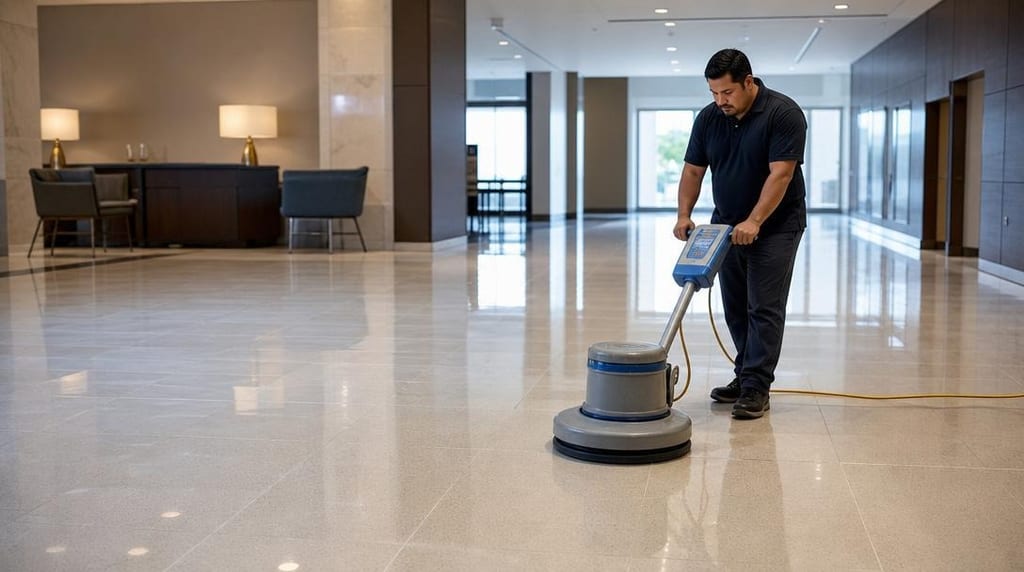
Think of floor care as a calendar, not a single event. A full strip and wax resets everything. Old finish comes off, fresh coats go down, and the floor looks the way it did when the VCT was new. That happens once a year, sometimes every 12 to 18 months depending on traffic. Buffing is what keeps that investment looking good between those cycles instead of deteriorating by month four.
A realistic maintenance calendar for a downtown Halifax office tower looks something like this: strip and wax in late summer or early fall before salt season starts, then run a buff cycle every two to four weeks through winter as road salt from Barrington and Spring Garden grinds into the finish. By the time spring arrives, the floor still looks maintained rather than wrecked. That kind of recurring care fits inside the broader scope of commercial floor refinishing in Halifax, where buffing, strip and wax service, and occasional floor stripping all work together across the year. If you want the deeper breakdown of the wax side of that schedule, we cover how often commercial floors should be stripped and waxed in a separate guide.
That’s the whole point.
There is a point where buffing stops being enough. Yellowing across the field of the floor usually means finish buildup has gone too far. Scratches that a buff passes over without lifting are another sign. Dark edges where wax has layered up along baseboards are the clearest signal of all, and no amount of buffing addresses that. When those signs show up, a full strip is due, and skipping it only makes the next strip harder.
The honest answer to “do I need to strip and wax, or will buffing be enough?” is this: it depends on where you are in the cycle. Buffing maintains a good floor. Stripping rescues a floor that buffing can’t fix anymore.
Not sure which side of that line your floor is on? Call C & C Commercial Cleaning Services Inc at (902) 440-8694. A quick walkthrough usually makes it obvious.
What Commercial Floor Buffing Costs in Halifax
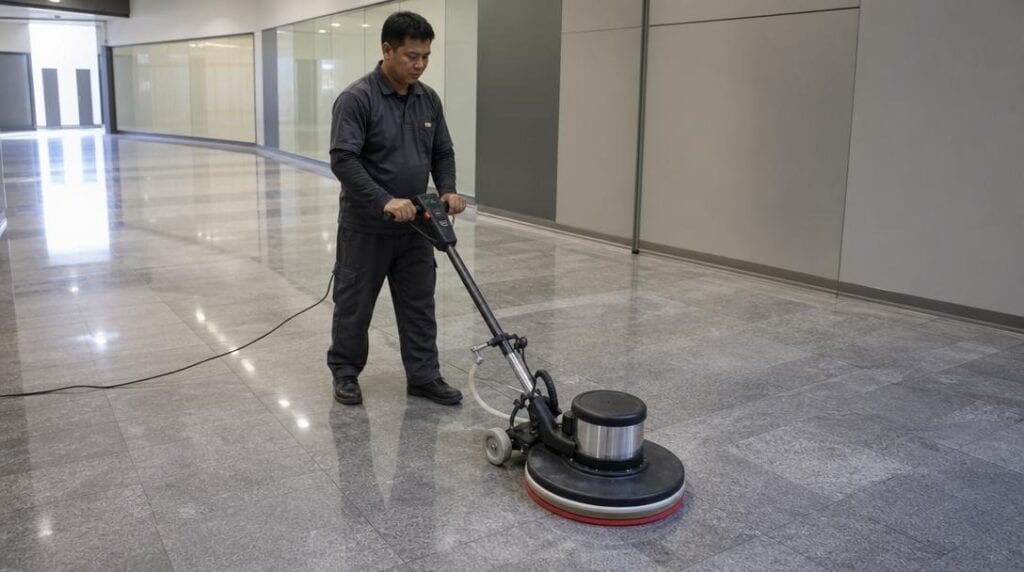
Pricing for commercial floor buffing in Halifax isn’t one-size-fits-all. Any vendor quoting a flat rate without seeing the space is guessing. A per-square-foot range gives you a more useful starting point, because the factors that move that rate around are real. We get into the broader picture of how commercial cleaning is priced in Halifax in a separate piece, but buffing follows the same logic.
Square footage is the obvious one. Beyond that, floor condition matters more than most facility managers expect. A lobby neglected through two Halifax winters, salt grit worked into the wax and finish gone gray, often needs a deep clean before the buff machine even touches it. That adds time and cost. A floor on a regular maintenance schedule buffs faster and comes out better.
Frequency changes the math, too. Recurring monthly or quarterly contracts almost always come in cheaper per visit than one-off calls. When C & C Commercial Cleaning Services Inc is returning to a site on a set schedule, the crew and equipment can be planned accordingly. That efficiency gets passed along.
Access is the last factor most people don’t think to ask about. A ground-floor Burnside unit with an open loading bay is a different job than a Purdy’s Wharf tower lobby with freight elevator booking windows and after-hours security sign-in. Downtown buildings take more coordination. That coordination has a cost.
After-hours timing, the 6 p.m. to 6 a.m. window most downtown Halifax buildings require, is another line item worth asking about upfront.
To get a proper quote that accounts for all of it, fill out the contact form on this page. C & C Commercial Cleaning Services Inc will ask the right questions before anything gets scheduled.
After-Hours Buffing for Downtown Halifax Buildings
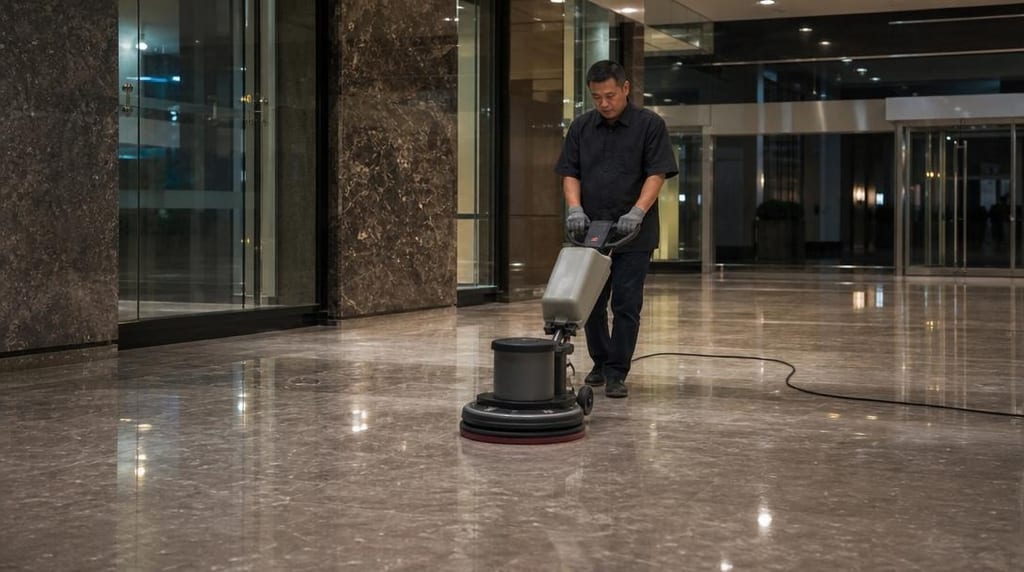
Downtown Halifax doesn’t offer much flexibility when it comes to floor care. Lobbies at Purdy’s Wharf, the Maritime Centre, and TD Centre run busy from early morning through the evening commute, which means buffing has to happen in the window most people aren’t around. Typically 6 p.m. to 6 a.m.
That’s the reality of commercial cleaning in downtown Halifax, and it’s standard practice, not a special request. C & C Commercial Cleaning Services Inc schedules around building access, coordinates with security for after-hours entry, and is out before morning foot traffic picks up. For retail and food-service tenants along Barrington or Spring Garden, that window gets tighter. Doors open at 7 or 8 a.m., so work often needs to wrap up by 6. The same overnight pattern carries through to the broader office cleaning in Halifax side of the work.
Mixed-use buildings add one more layer. When residential units sit above commercial floors, equipment noise matters. Quiet-running low-speed and high-speed buffers keep the work from carrying into upper floors at midnight.
None of this is unusual. It’s simply how professional floor care works in a city where common areas can’t be roped off during the day without generating a stack of complaints.
Why a Professional Buff Looks Different Than In-House Cleaning
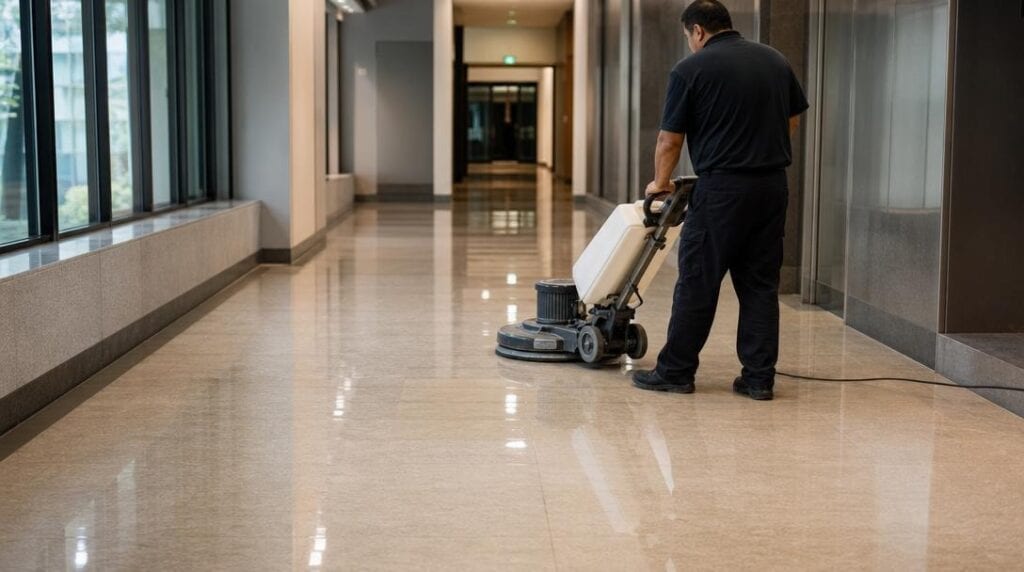
Most in-house janitorial staff work with what they have: a deck brush, a mop, maybe a low-speed machine borrowed from storage. The results are visible. Not because the staff aren’t doing their job, but because the equipment and technique are doing different things than what a floor finish actually needs. Proper commercial cleaning services on hard floors look different for a reason.
A commercial floor buffer runs at 175 to 300 RPM and applies consistent pressure across the pad. That’s what restores the crystalline surface of a wax finish.
A deck brush doesn’t get close.
Pad selection is where most rental-machine jobs go wrong. White pads buff and polish without cutting into the finish. Red pads scrub lightly and are used before a top coat. Black pads strip. Using the wrong one, especially a red pad on a finish already thinning from salt abrasion, cuts through the wax layer instead of restoring it. Once that happens, you’ve created more work than you started with.
The cumulative effect compounds fast. In-house buffing with wrong pads and inconsistent pressure wears down the finish over time. A floor that looks dull after six months of that approach usually needs a full strip just to get back to a starting point. A proper recurring buff schedule, dialled to Halifax’s winter and shoulder-season conditions, keeps that same floor looking sharp without ever reaching the point where a strip becomes unavoidable.
Most floors in Halifax that look like they need a full strip just need a proper buff cycle. Call C & C Commercial Cleaning Services Inc at (902) 440-8694 and find out which one yours actually needs.