
When a Halifax Commercial Floor Needs a Full Strip
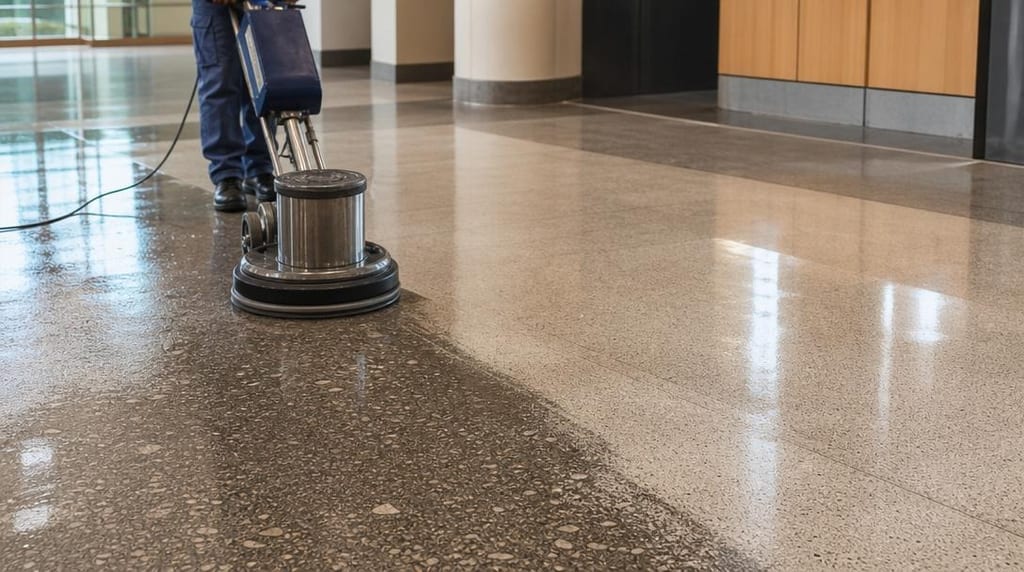
Halifax facilities managers who’ve been through a few winters already know what a stripped floor looks like versus one that just got recoated. Once road salt has worked its way through the wax layers, no amount of fresh finish will fix the problem.
Calling the wrong one wastes time and money.
Most Halifax facilities hit the point where a recoat won’t fix the problem somewhere between late winter and early spring. From November through April, road salt, brine, and sand track into every commercial entrance with every boot. The grit scratches wax finishes at a microscopic level. By March, that buildup has gone cloudy and porous, and salt residue has been working its way down through the wax layers toward the tile itself. At that point, a new coat of finish won’t bond properly and won’t look right. The only path forward is a full strip.
Salt contamination is the most common trigger, but it’s not the only one. Tile replacement prep is a regular strip-only job across Halifax. When a section of VCT gets damaged by a water leak or physical impact, the surrounding floor needs to be stripped clean before new tile adhesive will hold. Buildings switching finish systems, moving to a no-wax product, or prepping for new flooring also need a strip with no recoat to follow.
This page covers strip-only services. If your floor needs ongoing maintenance after the strip, that falls under our broader commercial floor refinishing scope. If you’re looking at a full strip and wax service, that process is covered on its own page. Start here if you just need the floor taken back to bare tile. If you’re not sure which one applies to your situation, C & C Commercial Cleaning Services Inc can sort that out in a short conversation. Call (902) 440-8694 before you book anything.
What Floor Stripping Actually Involves, Step by Step
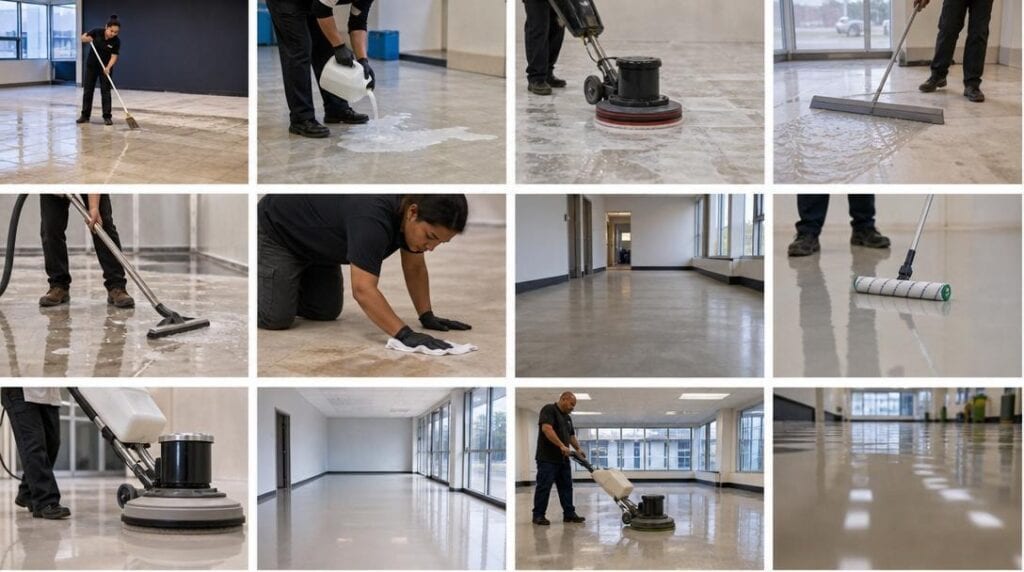
Most people picture floor stripping as spraying something on and scrubbing. The actual process has about a dozen distinct steps. The ones most crews cut short are the ones that cause problems later.
Before any chemical touches the floor, equipment moves out and base furniture gets covered or relocated. Then the stripper goes down, diluted to match the existing finish load, not just poured from the bottle at whatever ratio is printed on the label. Heavy buildup needs a stronger mix. Once it’s applied, dwell time matters.
On paper, most strippers need 10 to 15 minutes. In a Halifax building running hard heat through the winter, that chemical can start drying out in half that time. A dried stripper doesn’t lift wax. It just sits there. So local crews watch the floor, not the clock, and reapply if the solution starts to film over before the finish has fully emulsified.
When the slurry is ready, a low-speed buffer with a stripping pad works it loose. This isn’t aggressive scrubbing. You’re following the grain of the finish with controlled passes. After that, a wet vacuum picks up the slurry completely. Leaving even a thin film behind will lock contamination under the next coat.
Then comes the neutralizing rinse. Then a second clean rinse. Then you wait for the floor to dry, fully, not just surface-dry.
That’s where this scope ends. The floor is clean, bare, and ready for whatever comes next: a new finish system, new tile adhesive, or a product that doesn’t require any wax at all. If recoating is part of your scope, that gets handled as a separate strip-and-wax job. How long the strip itself takes, and when it can realistically happen in a working Halifax facility, is worth covering next.
How Long Does Floor Stripping Take in a Halifax Commercial Space?
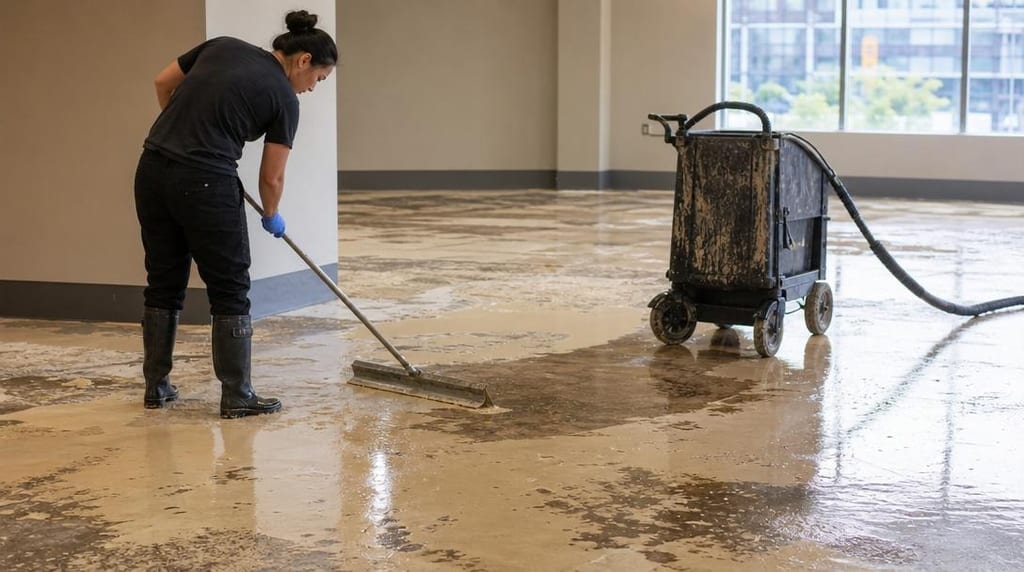
The honest answer depends on three things: square footage, how many coats of wax have built up over the years, and whether the stripper solution stays wet long enough to do its job.
For a small medical office or dental clinic in the 1,000 to 2,500 square foot range, one overnight shift is usually enough. A mid-size retail floor or a school wing running 5,000 to 10,000 square feet typically takes one to two nights. Larger facilities, a full school, a multi-wing medical centre, a big-box retail space, generally need a weekend shutdown to do it right.
Heavy buildup adds time. Halifax commercial entrances that have taken in road salt and brine through the winter months can have five, six, or more coats of wax fused into a single contaminated layer. That’s not a one-pass job. The crew applies stripper, waits for dwell time, works the floor, then checks whether the tile underneath is actually clean. In some cases they reapply and go again. If you’re trying to plan an annual maintenance schedule, we’ve written separately about how often commercial floors should be stripped and waxed.
Factor in dry time before any finish or adhesive can go down, and the scheduling math becomes straightforward: work starts at 6 p.m., the floor needs to be walkable before staff arrive, and anything that can’t be finished in one overnight window gets pushed to a full-weekend booking.
The floor type plays into that schedule too, and it affects the approach just as much as the size does. If you have a tight window and need to know whether it’s workable before committing, call C & C Commercial Cleaning Services Inc at (902) 440-8694. We’ll give you a straight answer.
Floor Types We Strip — VCT, Vinyl, Linoleum, Terrazzo
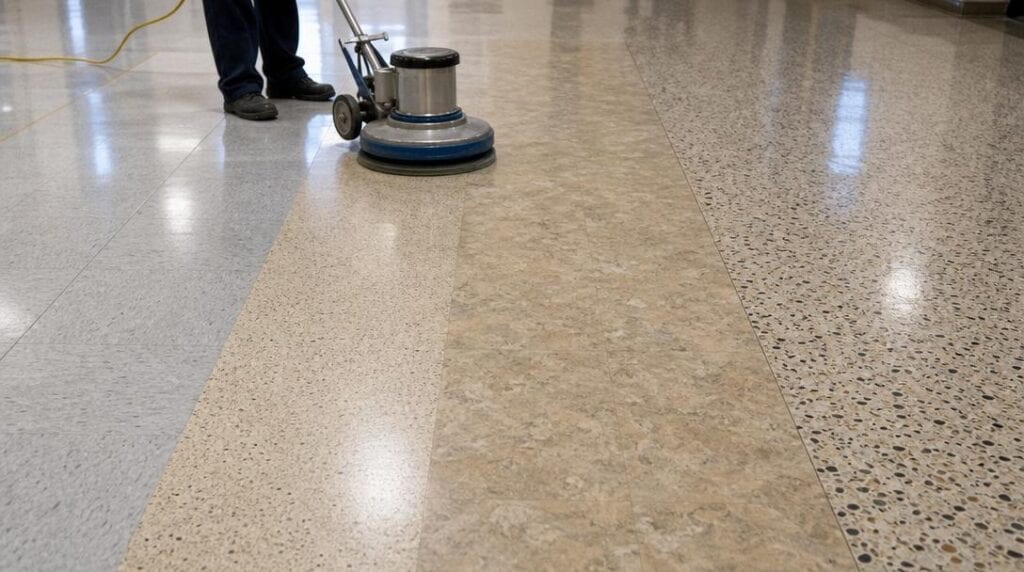
Not every floor takes a stripper the same way. Knowing what’s underfoot changes the whole job.
VCT, vinyl composite tile, is the most common surface we strip across Halifax commercial properties. Sheet vinyl and linoleum follow closely behind, especially in medical offices, school corridors, and older retail spaces. For terrazzo, stripping is a lighter process. It’s typically removing a finish coat rather than heavy wax buildup, but it still requires the right chemistry to avoid etching the stone surface.
One thing worth flagging for older Halifax properties: a lot of buildings in Dartmouth, the North End, and the central peninsula are still running original VCT from 70s and 80s renovations. That tile isn’t manufactured anymore, not in those patterns, anyway. A careless strip that gouges or lifts a tile creates a matching problem with no clean fix. On these floors specifically, we adjust pad aggressiveness and stripper concentration to protect what’s there.
What we don’t strip: sealed concrete, hardwood, and LVT with a factory finish. Those need a different scope entirely. Using a standard stripping process on them causes damage rather than solving anything. If your floor doesn’t actually need a strip and just needs the shine brought back, floor buffing is the lighter scope to consider.
Once you know your floor type is in scope, the next question is usually where the job is and what kind of building we’re working in.
Halifax Facilities That Schedule Floor Stripping
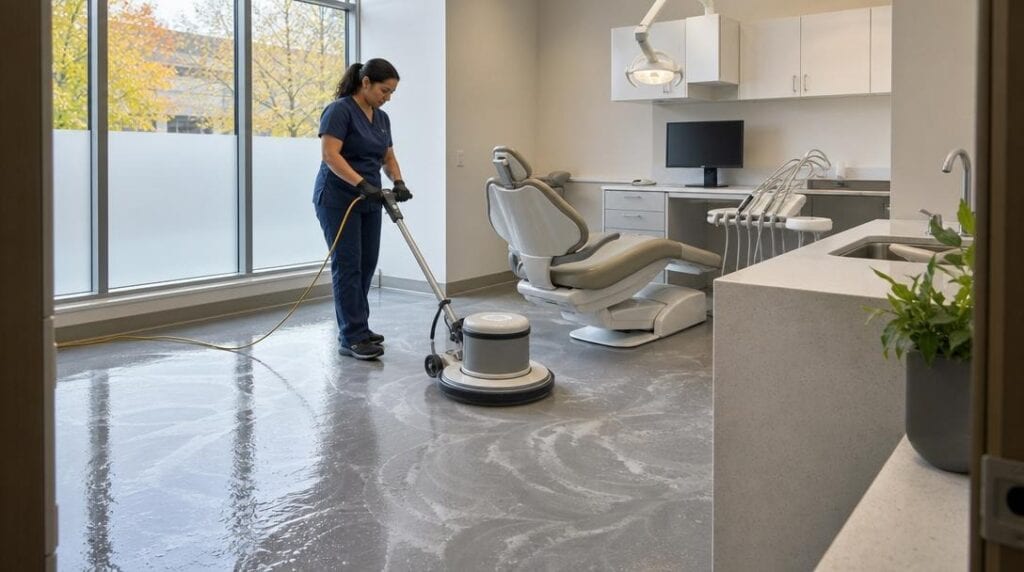
Medical and dental offices in Bayers Lake and Burnside that already use us for medical office cleaning call us regularly for strip work, usually at the end of a busy season when the wax has clouded past the point a recoat can fix. Schools across HRM tend to schedule during Christmas break or the last week of June. Retail in Mic Mac Mall and Halifax Shopping Centre often lines up strip work around fixture changeovers or pre-holiday resets.
Restaurants along Spring Garden and Quinpool run on tighter windows. Usually a Sunday night into Monday before the lunch rush.
Downtown office buildings book on a different rhythm, typically when a tenant turns over a floor or a facilities manager notices the finish has gone dull and patchy across high-traffic corridors. Many of these are buildings we already handle for office cleaning across Halifax and Dartmouth.
Tile replacement prep comes up more than people expect. When a water leak damages a section of VCT, or a heavy piece of equipment cracks a few tiles, the surrounding floor has to be stripped completely clean before new tile adhesive will bond. That’s a strip-only call with no wax going back down after.
All of that points to the same practical question most building managers ask once the scope is confirmed: does the floor need to be completely shut down, or can the building keep running while we work?
Can You Stay Open During a Floor Strip?
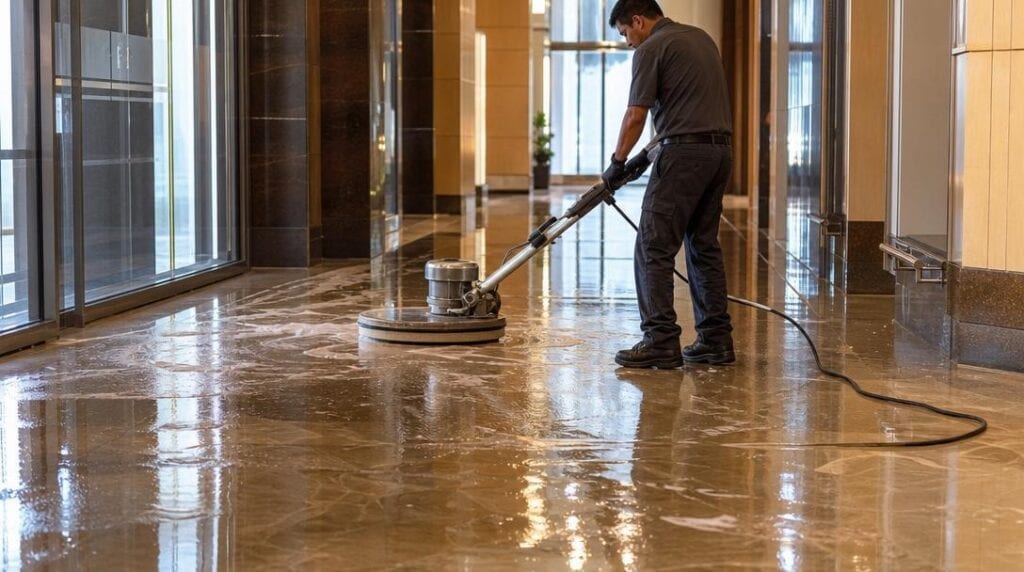
For most Halifax commercial buildings, the honest answer is no, not in the areas being worked. Stripper solution is slippery before it’s been picked up, the chemical smell is strong in enclosed spaces, and wet floors create liability. Most building managers schedule floor stripping after 6 p.m. on weekdays or book a full weekend window so the space is clear by the time staff arrive Monday morning.
Large facilities can often be sectioned off, though. A hospital in Burnside, a multi-wing office building downtown, a school with separate corridors: these can be stripped one zone at a time while other areas stay in use. It takes more scheduling coordination, but it works.
Retail and restaurant floors are the exception. Spring Garden Road locations or shopping centre tenants usually need a full overnight closure. There’s no practical way to cordon off a floor that customers need to walk across.
If you’re not sure what your building requires, a site visit answers that quickly. It costs nothing and it’s the logical starting point for any quote.
Getting a Floor Stripping Quote in Halifax

A walkthrough comes before any number.
Square footage matters, but so does what’s on top of it. How many coats of finish have built up, whether there’s salt contamination worked into the layers, what type of tile is underneath, and how the space can be accessed after hours. All of that shapes the job scope. None of it shows up reliably in a photo.
C & C Commercial Cleaning Services Inc serves the full HRM footprint: Halifax, Dartmouth, Bedford, and Sackville. Floor stripping is one piece of our full commercial cleaning services across the region. Most quotes come back within a day or two of the site visit. If your building is anywhere across HRM and you’re not sure if your floor needs a full strip or just a recoat, a quick walkthrough will sort that out. Call (902) 440-8694 to set one up, or fill out the contact form on this page if that works better for your schedule.