What Laboratory Cleaning Covers in a Halifax Research Facility
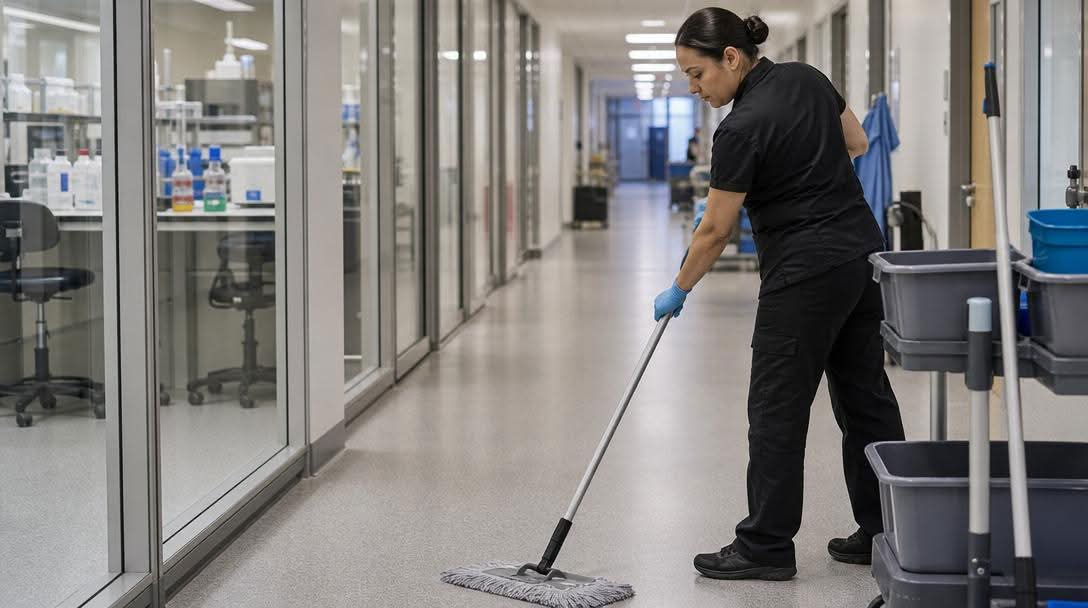
Most contractors who say they handle lab work have cleaned a corridor outside one. Dalhousie's biosafety office notices the difference fast.
C & C Commercial Cleaning Services Inc cleans the environment around the science. That means floors, waste streams (excluding biohazardous materials), interior glass, low-touch surfaces, restrooms, and common corridors within the lab suite. Fume hood exteriors get cleaned. The interior baffles and sash tracks belong to lab staff and their preventive maintenance schedule. Biosafety cabinet interiors are never touched by janitorial crews. Decontamination of BSC work surfaces is a researcher responsibility, full stop. Benchtops follow a similar rule: researchers decontaminate before the cleaning crew wipes down the surrounding area.
This scope holds across the South End research corridor. The Tupper Building, the Life Sciences Research Institute, and Dalhousie's Carleton Campus combined represent the highest density of active wet-lab space in Atlantic Canada. Each facility runs its own institutional protocols, but the fundamental division of responsibility is consistent: cleaners maintain the environment, researchers maintain the science. This is the same discipline C & C Commercial Cleaning Services Inc brings to broader commercial cleaning in Halifax, scaled up for a regulated environment.
Waste handling deserves a specific note. General lab waste, recycling, and non-hazardous sharps disposal containers fall within a janitorial scope. Biohazardous waste does not. It gets logged, packaged, and managed by designated lab personnel under institutional biosafety programs.
Defining this scope clearly before a contract is signed matters. If you're setting up a cleaning program for a Halifax research facility and need to work through the boundaries, C & C Commercial Cleaning Services Inc is reachable at (902) 440-8694. That's the conversation to have before the agreement is written.
The scope looks similar on paper across facilities. The actual cleaning routine is a different story.
Wet Lab vs. Dry Lab: Two Different Cleaning Routines
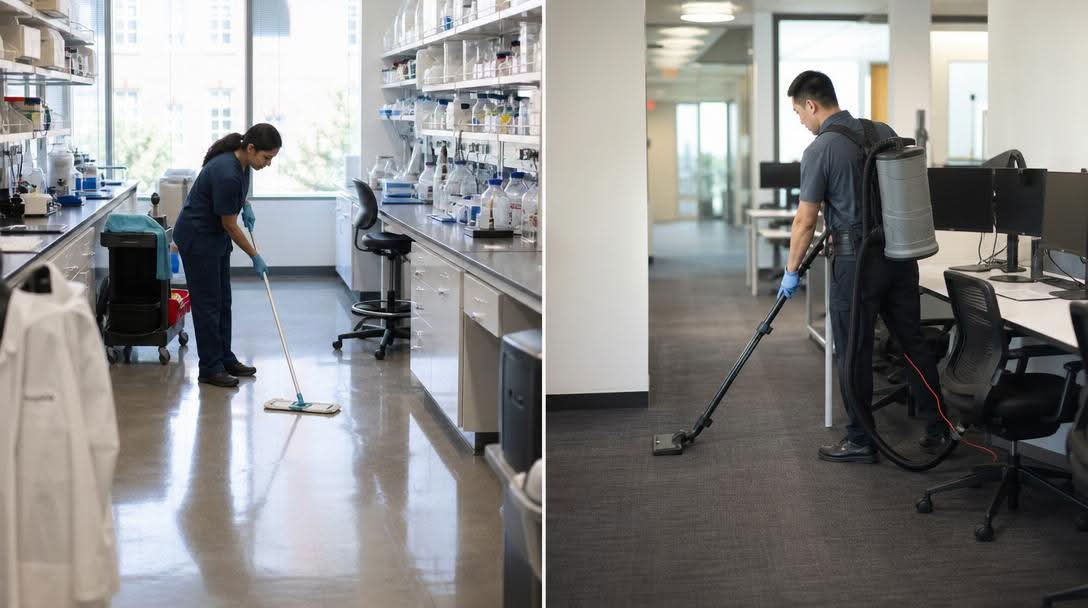
Walk into a wet lab at the Tupper Building, then walk into a computational research space in the engineering corridor. Same university, same cleaning contract. Completely different job.
Wet labs carry chemical splash risk as a baseline condition. Floors need a neutralizing program, not just mopping. A pH-buffered process that accounts for whatever ended up on the tile during the day's work. Sink basins and eyewash stations get checked and wiped on every visit, because standing water and mineral buildup compromise the emergency function of that equipment fast.
The harder skill is reading the benchtops. If a surface hasn't been decontaminated by lab staff before the cleaning crew arrives, that's a stop-work signal. A trained cleaner recognizes the difference between a cleared bench and one that still has residue, pipettes staged, or waste containers unsealed. You don't clean around active work. You flag it.
Dry labs bring a different set of considerations. Anti-static sensitivity around instruments means standard floor care needs adjustment, and compressed air near workstations is off the table entirely. Cable management on the floor, dense in any computational or data-heavy space, shapes every pass with a mop or vacuum. The crew is working around expensive equipment, not cleaning in open space.
Most of the wet lab volume in Halifax sits inside Dalhousie and NRC Marine Biosciences facilities. Dry lab space clusters further out, in engineering buildings and private analytics firms. The crew needs to know which environment they're entering before the shift starts.
Biosafety level is what really determines who can enter a lab at all.
Biosafety Levels: What BSL-1 and BSL-2 Change for the Cleaning Crew
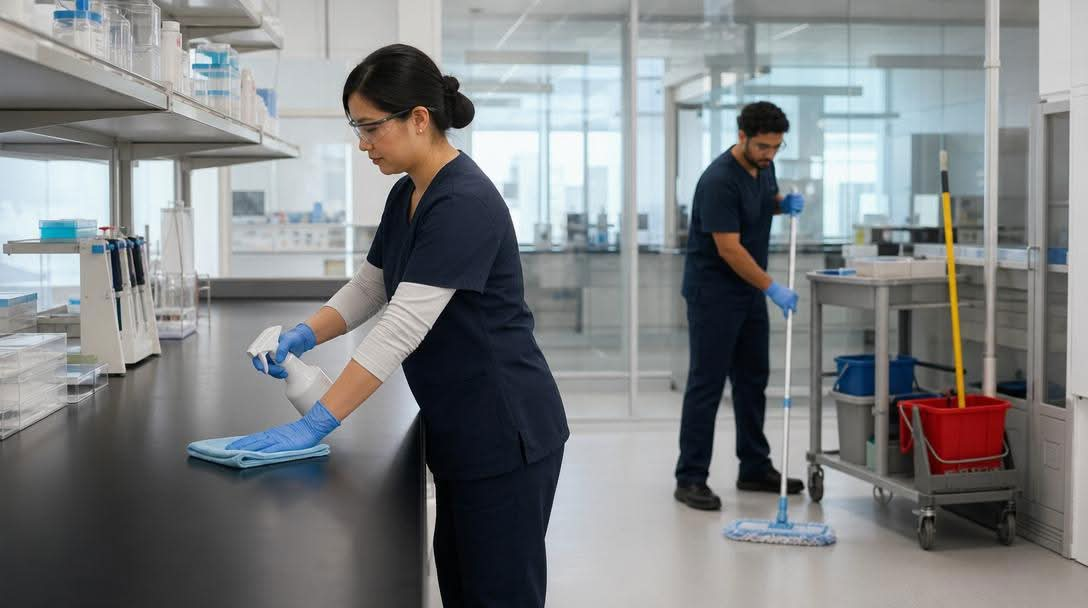
Most commercial labs a janitorial crew will ever enter are classified as BSL-1 or BSL-2. That covers the majority of research space at Dalhousie, NRC, and the private diagnostic facilities in Burnside and Bayers Lake. Understanding what each level actually requires is how you tell a lab-competent cleaning contractor from one that's guessing.
BSL-1 covers work with well-characterized, low-risk agents on open benches. Think introductory biology labs, non-pathogenic bacterial cultures, and basic chemistry environments. Standard commercial cleaning protocols apply here, provided the crew wears appropriate PPE, has completed basic lab safety orientation, and understands what not to touch. The risk profile is manageable with training and discipline.
BSL-2 is a different conversation. Work at this level involves agents that pose moderate hazards: bloodborne pathogens, certain respiratory agents, clinical specimens. Before a cleaning crew member enters a BSL-2 space, they need bloodborne pathogen awareness training, sharps-recognition training, and a clear understanding of who to contact if something looks out of place. Access is typically restricted when active work is underway.
At Dalhousie specifically, the Environmental Health and Safety office runs a formal biosafety program with medical surveillance requirements attached to it. Any contractor working in Dal research space is expected to align with those institutional protocols, not approximate them.
BSL-3 and BSL-4 facilities are rare in Halifax and fall outside commercial janitorial scope. Internal staff handle decontamination in those environments.
Even at BSL-1 and BSL-2, the operational discipline that separates a lab-competent cleaner from a generic office cleaner shows up in the smallest details. Something as basic as the color of the microfiber cloth in the crew's hand.
If your facility operates at either level and you're evaluating contractor readiness, those are exactly the questions to put to any cleaning company before they walk through your door. Ask about crew training, PPE protocol, and how they handle a stop-work situation. A lab-competent contractor should answer those without hesitation.
Color-Coded Microfiber and Zoned Supply Protocol
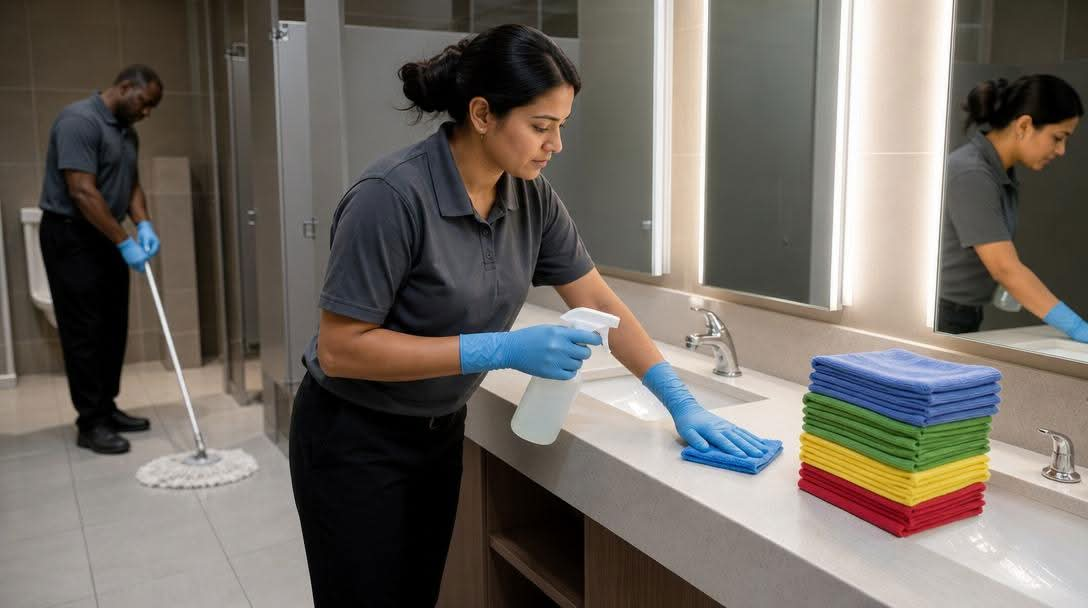
The color of a microfiber cloth is a policy decision, not a housekeeping preference.
In a compliant lab cleaning program, red cloths stay in restrooms, yellow handles high-touch surfaces and washroom fixtures, blue covers general surfaces, and green is reserved for food-adjacent or break areas. None of these cross zones. Ever. A cloth that touched a restroom floor does not enter a lab corridor, regardless of whether it looks clean.
Dedicated supply carts for each lab suite back up the same principle at a larger scale. Those carts do not leave the suite to pick up supplies from a shared housekeeping closet. Mop heads and buckets are tagged to the lab and laundered separately from the rest of the building's cleaning inventory.
Chemical compatibility matters here as much as the physical protocol. Ammonia-based products cannot go onto benches recently decontaminated with bleach. Residue left on stainless steel casework corrodes the finish over time and contaminates subsequent work.
Halifax adds another layer. The city's coastal humidity and salt-laden air push particulate through HVAC intake faster than most inland facilities expect. HEPA filter housings and return grilles in Halifax labs load up on a tighter schedule than a standard commercial office contract accounts for. That detail gets written into the cleaning plan.
Cleaning Labs Across Halifax's Research Corridor
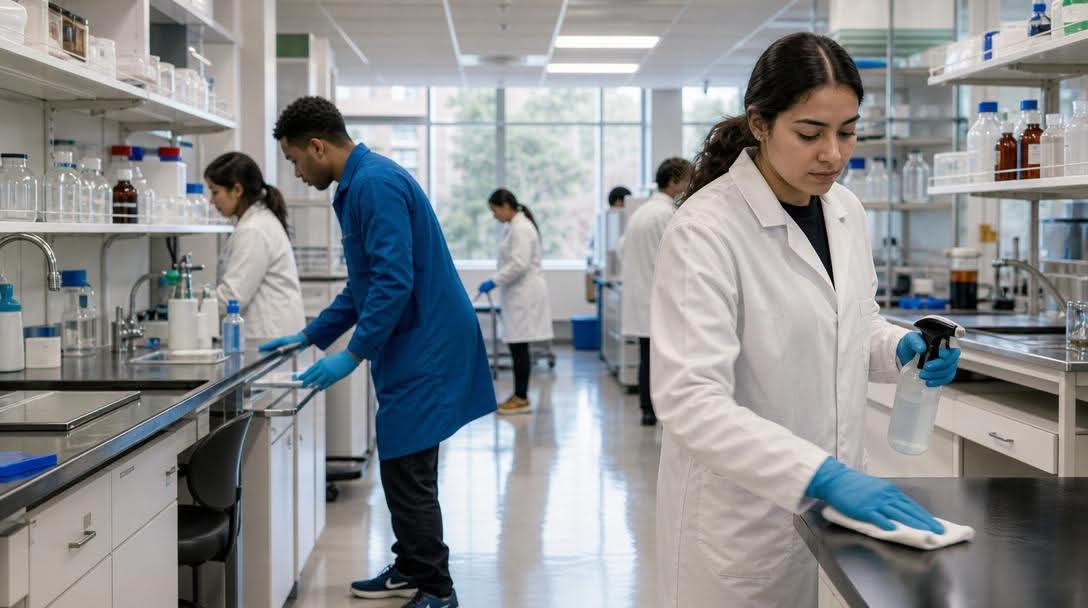
Halifax's research footprint is more concentrated than most people outside the sector realize.
The South End alone, the Tupper Building, the Life Sciences Research Institute, and the Carleton Campus buildings, holds the densest cluster of wet lab space in Atlantic Canada. These facilities run under Dalhousie's formal biosafety program, which means any cleaning contractor working inside them is expected to align with institutional protocols, not just show up with a mop cart.
A few kilometers north, the NRC Institute for Marine Biosciences sits on the Bedford Basin. Marine biotech brings its own cleaning considerations: saltwater-exposed equipment, humidity loads that accelerate filter clogging, and HEPA housings that need more frequent attention than a standard inland lab schedule would call for.
The IWK-adjacent clinical and diagnostic spaces add another layer. Documentation requirements are tighter, and the threshold for what counts as "clean" is calibrated to clinical standards rather than general research use. That same rigor carries into C & C Commercial Cleaning Services Inc's medical office and healthcare facility cleaning work across the HRM.
Then there's Burnside Industrial Park and Bayers Lake. Private biotech and diagnostic labs in these areas run outside university safety offices entirely. The cleaning contractor is often the only external party managing protocol compliance on-site. That's a different kind of responsibility.
Winter adds a Halifax-specific wrinkle across all of these locations. Road salt tracked in on boots is corrosive to stainless steel lab casework and floor finishes. Entryway matting and daily neutralizing floor programs are standard practice for C & C Commercial Cleaning Services Inc in any lab environment that sees Halifax winters, not an optional add-on.
What Our Lab Cleaning Crews Are Trained For
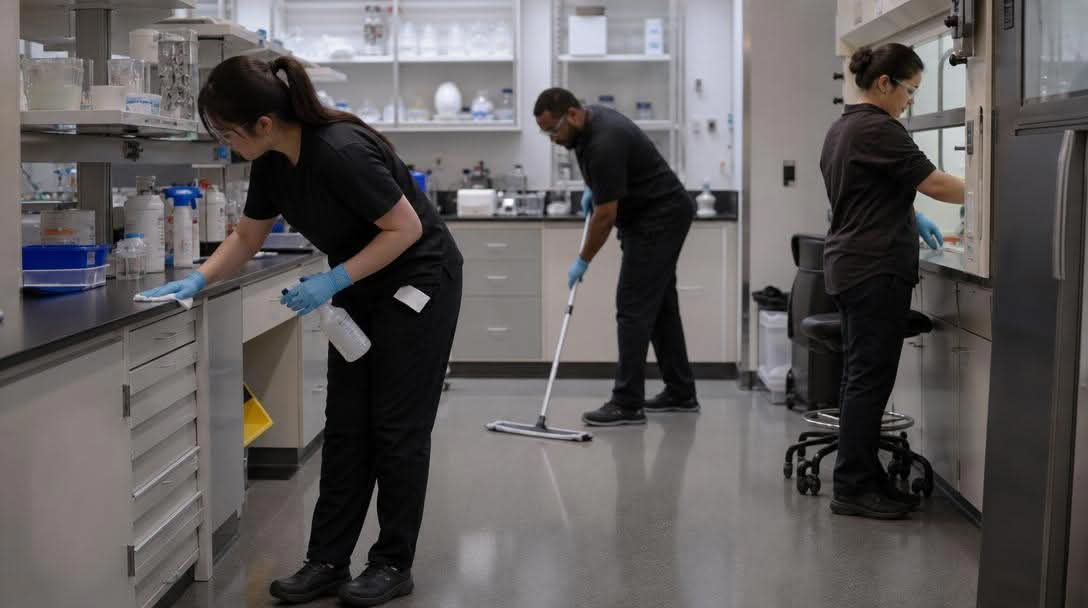
Knowing the protocol is one thing. The people executing it at 8pm in a Dalhousie wet lab are another.
Every C & C Commercial Cleaning Services Inc crew member assigned to laboratory work holds current WHMIS 2015 certification and bloodborne pathogen training. They know how to recognize sharps, how to report them, and what not to touch. If they run into a spill involving unknown chemistry, the procedure is contain, stop work, and notify. Not attempt cleanup. That boundary is trained, not assumed.
PPE selection is matched to the specific space and zone before anyone picks up a mop. Crew members coordinate with the lab's biosafety officer or facilities manager whenever protocols change, because the cleaning crew should never be the last to know about a procedural update.
C & C Commercial Cleaning Services Inc carries insurance appropriate for regulated environments. That matters to procurement departments at institutions like Dalhousie and the NRC, and to private diagnostic labs in Burnside that run without the safety infrastructure of a university backstop.
Crew assignments to laboratory accounts are kept consistent. The same people clean the same lab, week over week. Familiarity with a space is a safety asset: who's usually there, where the hazards live, what looks different tonight.
If you want to verify how a cleaning company trains its lab-assigned staff, C & C Commercial Cleaning Services Inc will walk you through it. Call (902) 440-8694 to ask about certifications, crew vetting, and how incidents get handled.
That consistency shapes the scheduling question too. Labs care about it just as much as the cleaning itself.
Scheduling, After-Hours Access, and Site Coordination
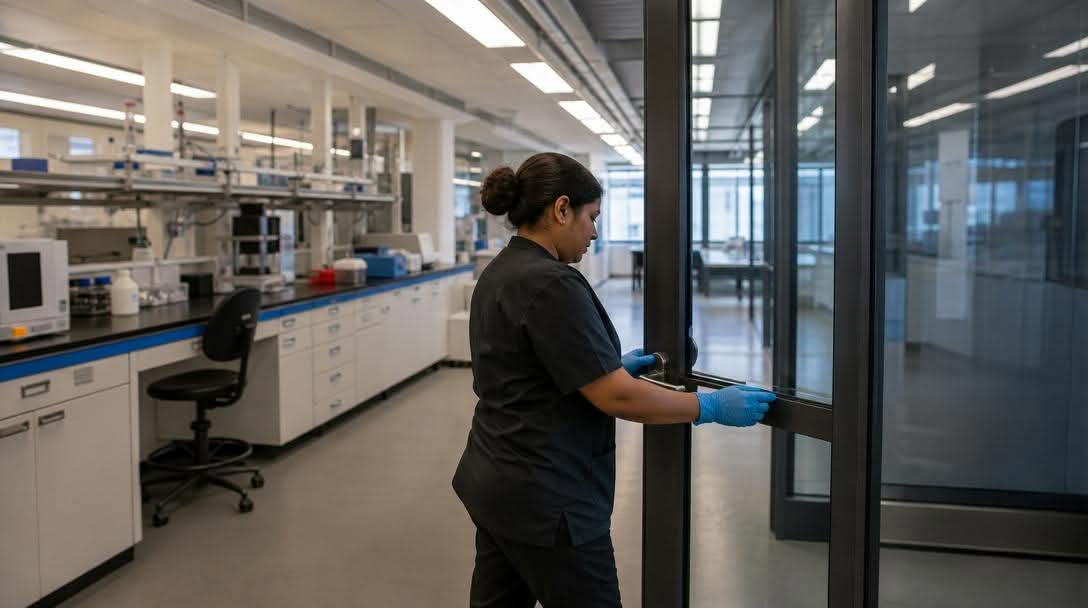
Most Halifax research facilities run cleaning windows in the evening or overnight, once researchers are out and equipment is idle. It's a tight operating window. A contractor who shows up late, uses the wrong entry point, or can't locate a supervisor creates problems that go beyond inconvenience.
C & C Commercial Cleaning Services Inc handles all of that on the front end. Key control, after-hours access procedures, and alarm protocols are written into the service agreement before the first crew sets foot in the building. For GLP-adjacent and clinical spaces, nightly cleaning logs are completed and signed off, not filed and forgotten. They're available if a QA audit asks for them.
Labs change. An active experiment might push cleaning back two hours. An equipment move might take a zone offline for a week. The scheduling needs to flex around that, and it does. The facilities contact at a Dalhousie or Burnside lab shouldn't have to explain to a call center why the sequencing room is off-limits tonight.
That's why every account with C & C Commercial Cleaning Services Inc has a direct line to a supervisor. Someone who knows the site, knows the protocol, and can make a call without escalating it three levels.
Halifax research facilities don't tolerate contractors who sort out the protocols on the job. Call C & C Commercial Cleaning Services Inc at (902) 440-8694 and we'll walk your space before we quote anything. If a call isn't convenient, submit your facility details through the contact form on this page and we'll follow up within one business day.
Frequently Asked Questions
Who is qualified to clean a research laboratory in Halifax?
A commercial cleaning contractor with WHMIS 2015 certification, bloodborne pathogen training, and biosafety awareness matched to the lab's classification level. General office cleaners are not equipped for this environment. The crew also needs a documented color-coded zone protocol and familiarity with the facility's institutional safety program before entering any active research space.
What biosafety cleaning requirements do commercial cleaners need to meet?
Requirements are set by the biosafety level of the specific lab. BSL-1 spaces require standard PPE and basic lab safety orientation. BSL-2 spaces add bloodborne pathogen awareness training, sharps recognition, and coordination with the facility's biosafety officer — including restricted-access protocols when active work is underway. Any contractor operating in Dalhousie research space is expected to align with the university's Environmental Health and Safety biosafety program.
Can your crew clean fume hoods and biosafety cabinets?
Exterior surfaces and the surrounding work area, yes. Interior baffles, sash tracks, and fume hood interiors remain the responsibility of lab staff under their preventive maintenance schedule. Biosafety cabinet interiors are never entered by janitorial crews — decontamination of BSC work surfaces is a researcher responsibility, and C & C Commercial Cleaning Services Inc respects that boundary on every visit.
Do you clean private diagnostic and biotech labs in Burnside and Bayers Lake?
Yes. Private labs outside university safety offices carry the same protocol requirements — they just don't have an institutional biosafety office to enforce them. C & C Commercial Cleaning Services Inc applies the same training standards and zone discipline to private diagnostic and biotech facilities across HRM that it brings to university-adjacent research environments.
How is laboratory cleaning priced compared to standard office cleaning?
Laboratory cleaning runs higher per square foot than office space because of the training requirements, dedicated PPE, lab-specific supplies, and a slower, more deliberate work pace. Square footage alone doesn't drive the number — biosafety level and lab type do. C & C Commercial Cleaning Services Inc prices lab contracts only after a site walkthrough, which is the right way to scope a regulated environment.